
Radiofrequency Lipolysis for Stubborn Fat
Radiofrequency lipolysis is easy to confuse with other treatments that use the same kind of energy. This note gives Johns Creek adults a way to tell them apart before they book.
The standard: what the procedure is
The American Society of Plastic Surgeons (ASPS) describes radiofrequency lipolysis as a procedure that uses a radiofrequency to heat the fat without an instrument making physical contact with the patient.
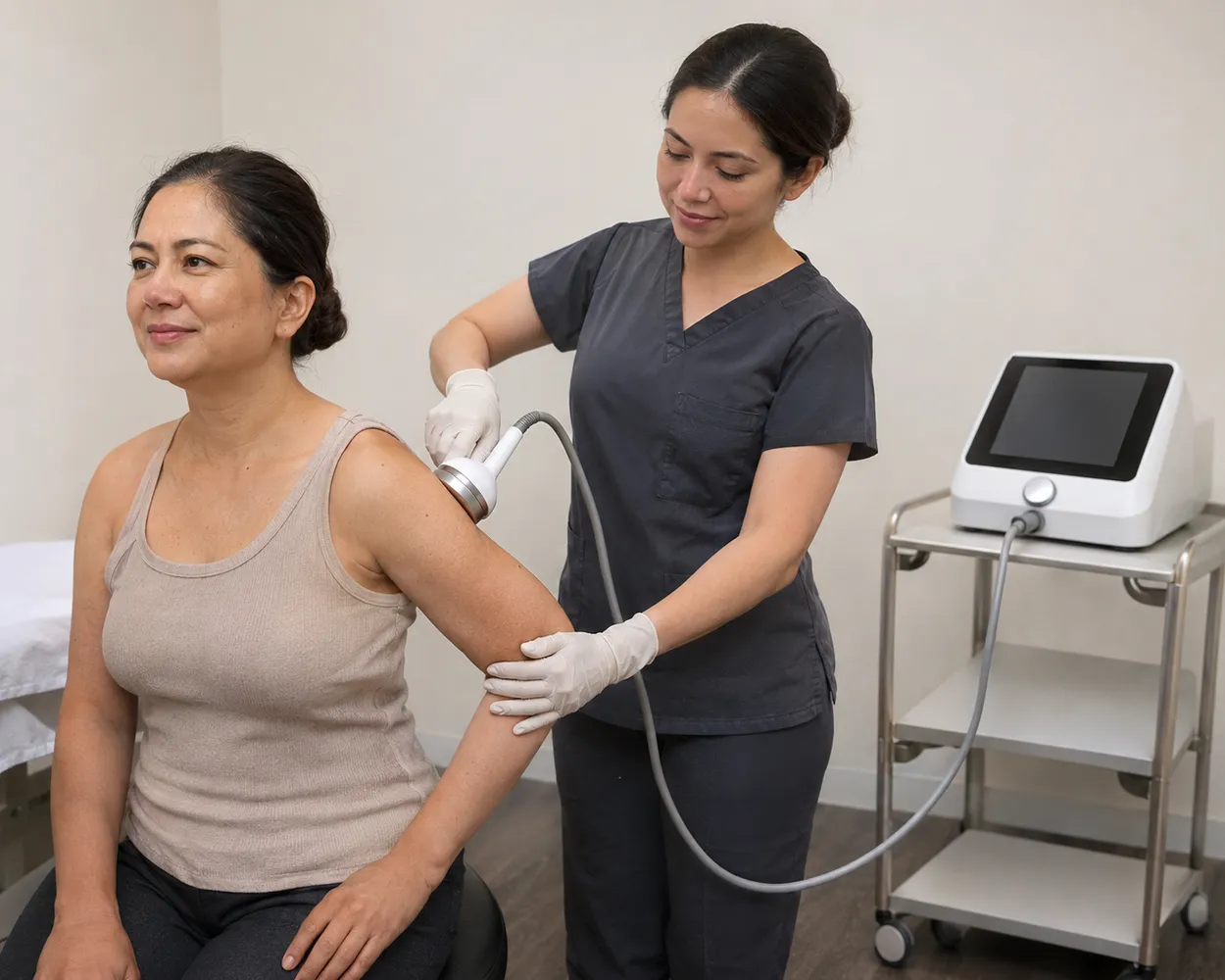
That description is the standard to hold a provider to. If the treatment on offer touches the skin with an instrument, it is not the procedure described above.
A short checklist for the consultation
- Is the treatment called radiofrequency lipolysis, and is the device named?
- Does the provider describe the heating of fat without contact, in the terms above?
- Is the area you want treated named in writing?
- Does the provider say how many visits to plan for?
Radiofrequency is also used for other medical purposes. This patient information page on radiofrequency ablation of varicose veins shows one of them, and it is a different procedure from the one in this note.
The shortcut that breaks it
The shortcut is to use the word radiofrequency as a label for any device that heats tissue. Radiofrequency microneedling is one such treatment, and the FDA's safety communication on certain uses of radiofrequency microneedling is worth reading so you can keep it apart from fat treatment.
Skin tightening is another separate topic. If that is your goal, Cleveland Clinic's explainer on ultrasound skin tightening covers a different approach.
How to judge the result afterward
Check what was done against what was written down. Was the device the one named? Was the area the one you chose? Did the number of visits match the plan?
If any answer is no, ask for it in writing before you pay for more. For a broader look at how radiofrequency is used in medicine, see Cleveland Clinic's page on radiofrequency ablation.